
TRAVEL TIPS
Valuable information for traveling in Thailand
Preparations and worry-free tips for traveling in Thailand:
Safety:
Thailand is generally a very safe country for travelers. Whether you’re exploring bustling cities or quiet islands, you’ll often find friendly locals ready to help you with a smile. Personally, I’ve always felt incredibly welcomed and supported here — even as a solo female traveler. Of course, like anywhere in the world, it’s important to stay aware of your surroundings and use common sense, but overall, Thailand is a peaceful and welcoming destination where you can truly relax and enjoy.
Passport and Visa
Make sure your passport is valid for at least 6 months from the date of entry.
Thailand Digital Arrival Card (TDAC):
Starting May 1st, 2025, all foreign travelers must complete the Thailand Digital Arrival Card (TDAC) before entering the country. This digital form replaces the old paper TM6 form and must be filled out online within 72 hours prior to arrival in Thailand. It is completely free of charge — no payment is required to complete or submit it.
Recommended vaccinations:
It is advisable to be up to date with common vaccinations such as tetanus, hepatitis A and B, and typhoid fever. Check with your doctor or a health center specializing in travel medicine at least 4-6 weeks before your trip to check if you need additional vaccinations based on your itinerary.
Travel Insurance:
Having travel insurance isn’t just a nice extra — it’s a must. Medical treatments in Thailand can be surprisingly expensive. Even a simple visit to the emergency room or a minor accident can result in high costs if you’re not covered.
That’s why it’s so important to come with a good travel insurance policy that includes medical assistance, hospital stays, and emergency evacuation if needed. It should also cover things like trip cancellations, lost luggage, and any adventure activities you plan to do (like snorkeling, diving, riding a scooter, or hiking).
It’s a small investment for a lot of peace of mind — and it can truly make a difference if something unexpected happens

Getting online in Thailand:
Staying connected is easy and affordable. Upon arrival, you can purchase a prepaid SIM card at the airport or at convenience stores like 7-Eleven. Major carriers, such as AIS, DTAC, and TrueMove, offer data plans at very affordable prices.
What to pack:
Thailand is warm, tropical, and casual — so pack light, breathable clothes, swimwear, comfortable shoes, and don’t forget sunscreen, mosquito repellent, and a portable battery for your phone (you’ll be taking lots of photos!).
Make sure to bring at least one outfit that covers your shoulders and knees for visiting temples— respectful dress is required to enter these sacred places. A light scarf or long skirt can be a great option.
That said, don’t stress too much about packing every little thing. 7-Eleven stores are everywhere and have pretty much everything you might need — from toiletries and snacks to chargers, meds, and more.
Need a quick checklist?
We’ve got a dedicated highlight on our Instagram page with a list of must-bring items — check it out before you zip your suitcase!
Electrical adapters and plugs
In Thailand, the electrical current is 220V with type A, B, and C plugs (flat and round plugs). To be prepared, pack a universal adapter in your suitcase to ensure you can charge all your devices without problems.
Extra budget and currency exchange
Although Thailand is an accessible destination, it is advisable to carry an extra budget for unforeseen events, optional activities, or for those special souvenirs you want to take home. Credit cards are accepted in most tourist places, but always have some cash for small shops, markets, or local transportation.
The official currency is the Thai baht (THB). You can exchange money at the airport, banks, and exchange offices in the cities. Rates are usually more favorable at banks, and it is advisable to carry dollars or euros to exchange. You can also use ATMs, but be aware of fees for international withdrawals.
Climate:
Thailand has a tropical climate, with warm temperatures year-round. From November to February, the weather is cooler and drier, ideal for traveling. From March to May, the heat is more intense, and June to beginning of October is the rainy season. Wear light, comfortable, breathable clothing
Culture and Respect:
Thailand is known as the “Land of Smiles,” and locals are generally warm and welcoming — but Thailand is a country with deep traditions and respect is a big part of Thai culture.
Dress modestly when visiting temples (covering shoulders and knees), always remove your shoes before entering someone’s home or sacred places, and avoid touching anyone’s head, as it’s considered the most sacred part of the body. Public displays of affection are best kept to a minimum, and raising your voice or showing anger in public is frowned upon.
Useful Apps
Download apps like Google Maps, Grab (for cheap and safe transportation), Google Translate to help you communicate in Thai and XE Currency for quickly converting Thai Baht into your home currency.
If you plan to book tours or activities, Klook and GetYourGuide offer good deals and options you can reserve in advance or on the go.
Basic First Aid Kit:
Carry a small first aid kit with the essentials: painkillers, mosquito repellent, sunscreen, motion sickness tablets for boat rides, mountain roads, or longer bus journeys, anti-diarrheal pills, band-aids for minor cuts or blisters, and any personal medications you need.
With just a few essential items, you’ll feel more prepared and relaxed to enjoy everything Thailand has to offer.

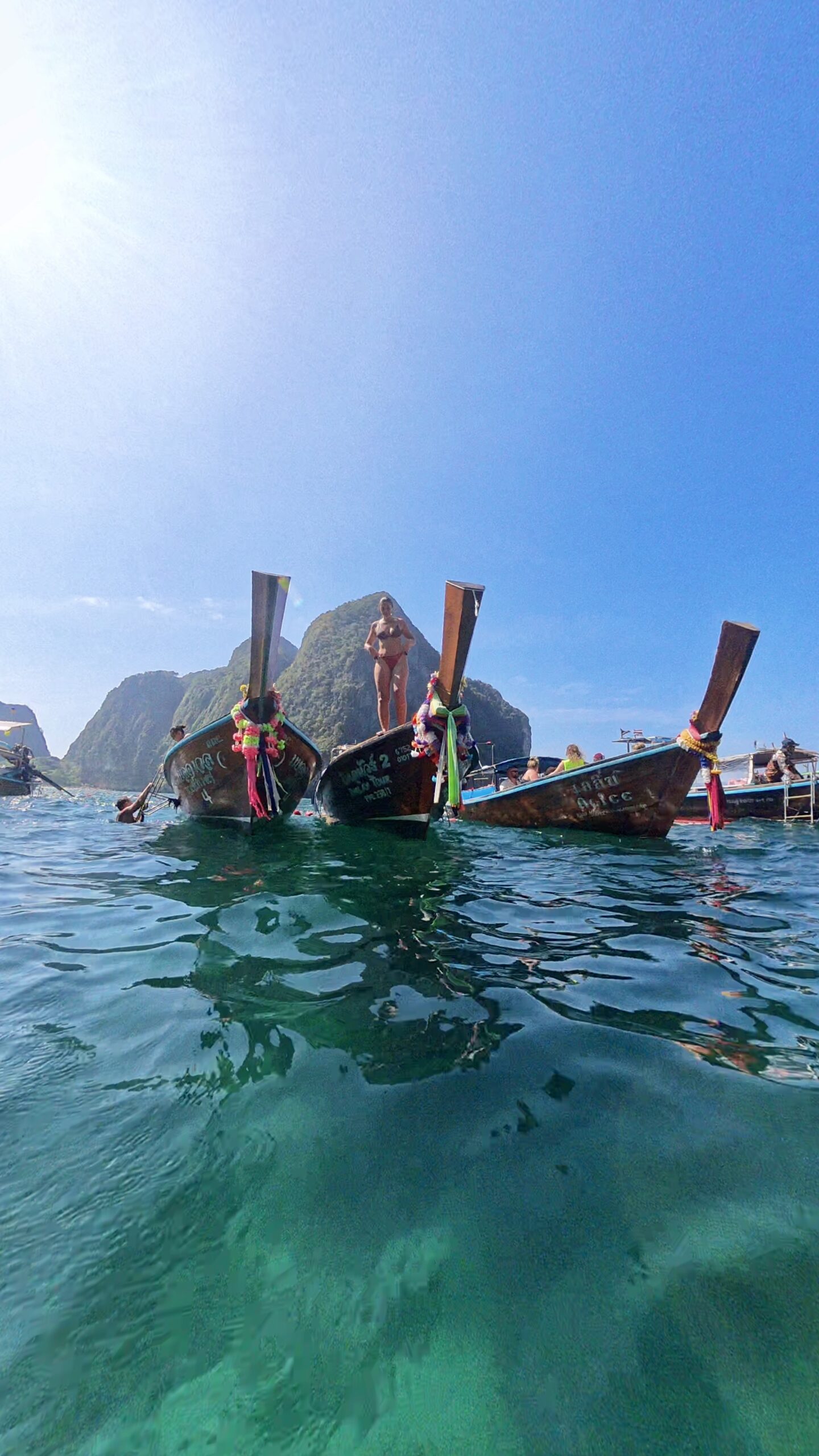
Guide and Travel Tips for Solo Female Travelers for the First Time.
Be confident and stay positive:
Traveling alone for the first time can be intimidating, but it is also one of the most empowering experiences you can have. Trust in your problem-solving abilities and keep an open mind. Don’t be afraid to ask for help when you need it; most locals will be happy to lend a hand.
Learn some basic Thai phrases:
Knowing words like “hello” (Sawasdee), “thank you” (Khop khun), and “help” (Chuay duay) can be very useful and will allow you to better connect with locals.
Stay connected and share your location:
Use map apps and always have your portable battery charged. Share your itinerary and real-time location with family or close friends. This will give you extra peace of mind during your trip.
Embrace the experience and build connections:
One of the best parts of traveling solo is meeting other people. Don’t hesitate to join group activities, workshops, or tours. It’s a great way to make new friends and enrich your experience with the perspective of other travelers.